The QSR back-of-house problem
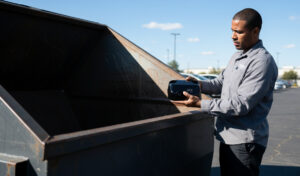
Every QSR operator I met recited the restaurant’s food cost percentage from memory. Fewer operators know what happens behind the back door, where the dumpster sits, where the grease trap waits for pumping, where the oil tank collects a week’s worth of fryer runoff. The back door is the blind spot where restaurant back of house waste piles up unchecked. And it’s an expensive one.
I’ve spent twenty-five years in waste management and intelligence, long enough to watch quality control programs mature at every link in the restaurant supply chain except the last one. Kitchens audited portion sizes. They audited vendor deliveries. They rarely audited what leaves through the back door, even though that stream carries real financial and legal exposure.
Here’s the thesis, plainly: managing commercial waste (food organics, used cooking oil, grease trap discharge) requires pairing automated technology with the right strategic partner. Both pieces matter equally. Together, they shape how restaurants manage waste and recycling, and keep operations compliant when inspectors, haulers, and city code all show up at once.
The real costs of back-of-house waste failures
Start with the invoice nobody budgets for.
Haulers charged overage fees for lids that wouldn’t close; municipalities issued citations for restaurant dumpster overflow that spilled onto the sidewalk. A single multi-unit operator can rack up more than $15,000 a year in these penalties without anyone in finance ever flagging “waste” as a line item worth investigating (RTS).
Then there’s labor. It’s the cost nobody sees until the schedule falls apart. Prep cooks pulled off the line to break down boxes. Line staff scraping out containers by hand because the dish machine is already backed up. A shift lead wiping down a grease-slicked back hallway during the Friday dinner rush, because nobody else is free. None of that shows up on a P&L as “waste management.” It shows up as missed prep, slower tickets, and a kitchen manager wondering where the hours went.
And then the hazard that actually hurts people: fats, oils, and grease (FOG) on a kitchen floor are one of the most common causes of slip-and-fall injuries in foodservice. Workers’ comp claims from FOG-related falls are almost entirely preventable with routine grease control. That makes them the worst kind of cost — the kind a restaurant pays for twice, once in the claim and once in the turnover that follows.
Overflow fines. Lost labor. Injury claims. Three different cost centers, one shared root cause: nobody treated the waste stream as something to manage, so the waste stream managed the kitchen instead.
Waste tracking as core quality control
Here’s where most operators get the sequence backward. Operators think of waste tracking as an environmental initiative, something adjacent to the real business of running a kitchen. Waste tracking sits at the center of kitchen operations. It’s diagnostic.
Pre-consumer scrap (the trim, the over-portioned ladle, the batch that sat past the FIFO window and got tossed) is a performance metric disguised as garbage. Weigh the scrap, categorize the scrap, and you’ve got a direct readout on recipe deviation, over-production, and inventory discipline. A kitchen that consistently throws out the same cut of protein isn’t wasteful by nature; it tells you the prep spec is wrong, or the forecast is, or both.
The financial case is not subtle. WRI data shows restaurants that invest in food waste tracking and prevention see an average return of $7 for every $1 spent (Waste Dive). Not a projected return. A measured one, across commercial kitchens that bothered to look.
That ratio comes from doing something as unglamorous as weighing the trash, not from a capital upgrade or a new piece of kitchen equipment.
Navigating complex streams: organics, UCO, and grease traps
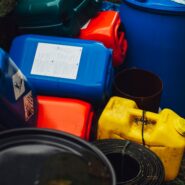
Restaurant waste isn’t one stream. It’s three, at minimum, and each one carries its own regulatory teeth.
Grease traps operate under what’s informally known as the “25% rule”: once the combined layer of FOG reaches a quarter of the trap’s depth, it needs pumping, under standards tied back to Clean Water Act pretreatment requirements (City of Bloomington; San José). Skip the pumping, and FOG migrates into the sewer line, hardening into blockages that cause backups; municipalities trace those backups directly back to the restaurant and fine accordingly (Southern Green). California alone has detailed interceptor sizing and pumping-frequency rules that vary by jurisdiction, so a multi-state chain ends up managing a different rulebook in every market it enters (Grease Trap Locator).
Used cooking oil represents a standalone liability, sitting outside in a tank left effectively unattended for most of the day. Oil theft counts as a real and recurring problem; a spill into a storm drain is a real and recurring violation. Handled correctly, that same UCO has resale value as biodiesel feedstock; security and recycling revenue amount to the same conversation, not separate ones (RTS). And when unlicensed or non-compliant haulers handle the waste, the downside doesn’t stop at a fine. Federal prosecutors have sent at least one waste company owner to prison for illegal dumping tied to commercial grease and wastewater — a reminder that the hauler you choose is a legal decision, not just a procurement one (Waste Dive).
Organics are the newest front. California’s SB 1383 mandates food waste diversion with real administrative penalties attached (RecycleMore). New York City’s commercial organics rules require high-volume generators to separate food scraps for collection, with haulers like Action Carting building entire route structures around the mandate (NYC DSNY; Action Carting). State-level food donation and recycling law adds yet another layer for generators above a certain threshold (Feeding NYS). Florida regulates grease waste disposal and hauler licensing on its own separate track (Florida DEP).
Three streams. Three sets of rules. One kitchen is expected to track all three without a dedicated compliance role, which explains why fast food waste compliance keeps landing on whoever runs the waste program.
Modernizing back-of-house: strategic partners and smart technology
The fix isn’t a bigger dumpster. It’s a smarter one.
IoT fill-level sensors now sit inside commercial containers and report back in real time. That sounds minor until you’ve paid for a hauler tip on a bin that was half-empty (RTS; Waste Dive). Ultrasonic sensors and data platforms do the same job at scale: they eliminate the premature pickup, and they catch the overflow before it becomes a citation (RTS).
No number of sensors fixes a bad contract on its own, no matter how many a kitchen bolts onto the dumpster. That takes an audit: right-sizing container capacity to actual volume, consolidating billing across locations, and comparing a managed service model against a traditional hauler relationship that’s gone untouched since the restaurant opened (RTS). Managed waste services exist precisely because most operators overpay for unused capacity and underprice the compliance risk already on the books.
The third piece is visibility. Centralized digital portals pull pumping manifests, recycling logs and diversion records into one place, so when a health inspector or environmental auditor shows up, the paperwork already exists (RTS). For a multi-unit operator, that’s the difference between producing a compliance record in thirty seconds and calling three different haulers to reconstruct one.
Sensors catch the overflow. Contracts catch the overpayment. Portals catch the audit before it becomes a problem.
Overcoming daily operational realities
None of these systems work if the five-day-old prep cook doesn’t know which bin takes the food scraps.
QSR turnover runs brutal. Training time becomes the scarcest resource in the building. Scarce training time makes the case for color-coded, visually obvious disposal stations on the prep line: systems that don’t require reading a policy manual to use correctly on day one. The alternative is what Disney World’s own custodial staff reported when a new waste-tracking system rolled out: frontline friction, confusion, and workers who weren’t convinced the new process made the job any easier (Waste Dive). Technology built without the user in mind gets ignored right back.
Peak-hour friction is the other variable. A back-of-house SOP that works fine at 10 a.m., when the kitchen is quiet, falls apart completely at 1 p.m., when staff contest every square foot of floor space. The programs that survive are the ones built for the rush, streamlined enough that sorting and disposal take only seconds.
Actionable framework for restaurant operators
Five steps. None of them require a renovation, though each one demands a habit change on the line.
-
Audit the hauling contract. Know the location’s tonnage, container sizes, and actual pickup frequency before negotiating anything.
-
Install container sensors. Stop paying for pickups your dumpster doesn’t need.
-
Digitize FOG pumping logs. A manifest that exists only on paper becomes a manifest an inspector struggles to verify quickly, which works against the operator.
-
Station prep-line sorting. Color-coded, visible, built for a five-minute training window.
-
Consolidate managed services. One partner, one portal, one invoice across every location.
Quality control doesn’t end at the pass, where the last plate gets checked before it leaves the kitchen. Quality control ends at the back door, with a trap pumped on schedule, a tank secured properly, and a dumpster lid that closes. Get that part right, and the rest of the kitchen runs the way it was supposed to all along.